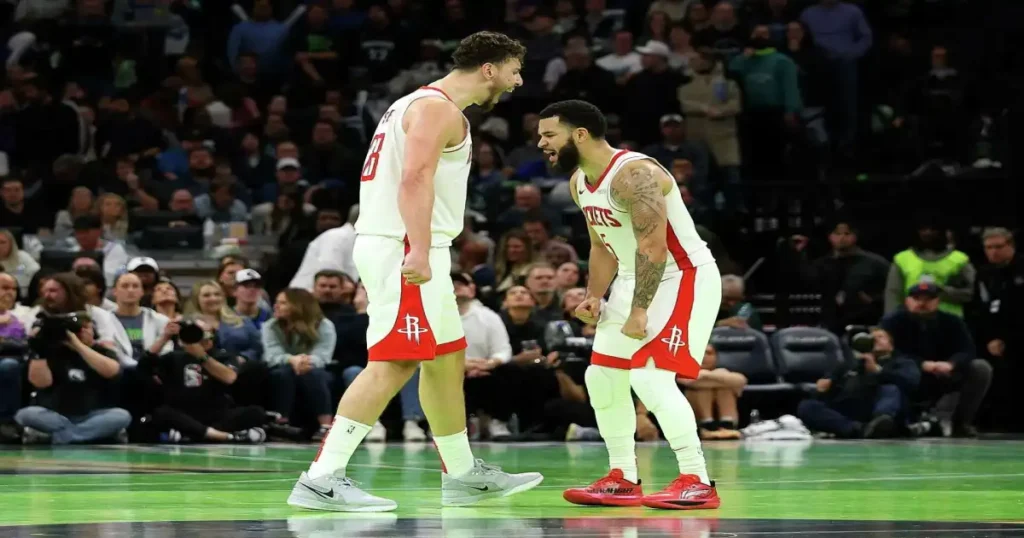
The upcoming clash between the Minnesota Timberwolves and the Houston Rockets has generated significant buzz across the NBA landscape, as both teams prepare for a matchup that could have meaningful implications for momentum, standings, and long-term development. While social media chatter is filled with bold predictions and dramatic narratives, the reality points to a competitive, tactically rich contest shaped by preparation, execution, and roster depth.
The Minnesota Timberwolves enter the matchup as one of the more structured teams in the league, built around a strong defensive identity. Anchored by their frontcourt presence and perimeter defenders, the Timberwolves have consistently emphasized disciplined rotations, rim protection, and controlled pace. Their offense often relies on balanced scoring, ball movement, and timely shot creation rather than one-dimensional play.
On the other side, the Houston Rockets continue to progress through a developmental phase, blending young talent with veteran leadership. The Rockets have focused heavily on pace, athleticism, and defensive pressure, aiming to disrupt opponents and generate transition opportunities. While inconsistency has occasionally surfaced, Houston’s ability to adjust game plans has become increasingly noticeable.
Houston’s Strategic Approach
According to team insiders and recent performances, the Rockets are expected to prioritize defensive versatility and tempo control against Minnesota. Rather than engaging solely in half-court sets, Houston is likely to push the ball early, testing the Timberwolves’ transition defense. Quick outlet passes, aggressive rebounding, and fast breaks could play a pivotal role.
Defensively, Houston may look to limit Minnesota’s interior scoring by collapsing the paint and forcing outside shots. This approach requires disciplined closeouts and communication, especially against a Timberwolves team known for capitalizing on defensive lapses.
Key Matchups to Watch
Several individual matchups could shape the outcome. Minnesota’s ability to establish dominance in the paint will be tested against Houston’s energetic defenders. Meanwhile, the Rockets’ young guards will face pressure to make smart decisions under Minnesota’s defensive schemes, which often prioritize forcing turnovers and contested shots.
Bench production could also prove decisive. Both teams have relied on second-unit contributions at various points this season, and whichever bench maintains efficiency and composure may swing the game’s momentum.
Beyond a single win or loss, this game serves as a measuring stick for both franchises. For Minnesota, it’s an opportunity to reinforce their status as a disciplined, playoff-caliber team. For Houston, it represents another step in evaluating growth, cohesion, and the effectiveness of their evolving strategies.
While headlines may frame the Timberwolves vs Rockets matchup in dramatic terms, the true story lies in preparation, adaptability, and execution. Fans can expect a competitive, hard-fought game defined less by hype and more by tactical decisions on both ends of the floor. As the season progresses, games like this offer valuable insight into where each team stands—and where they may be headed next.