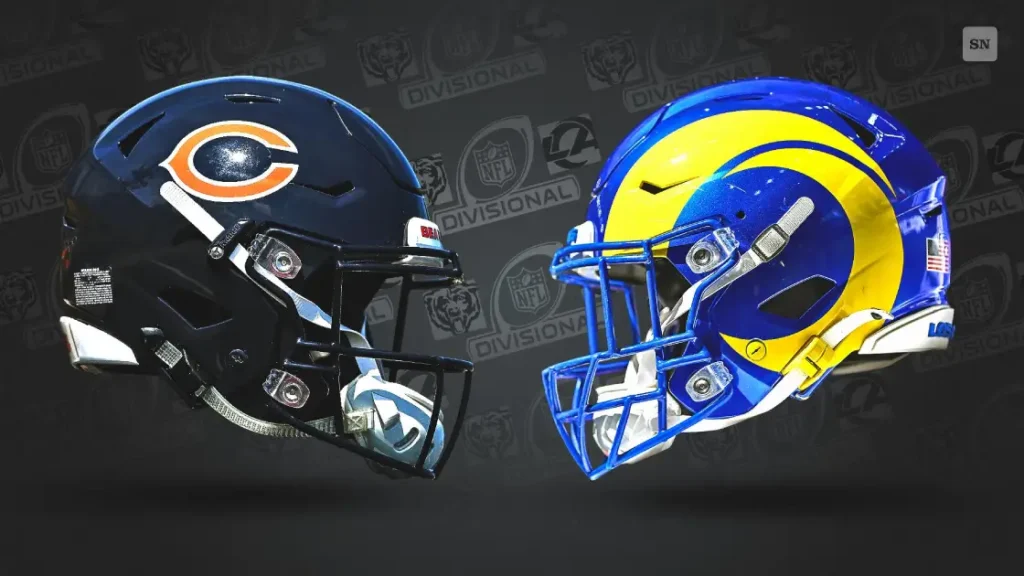
In a heart-pounding NFC Divisional Round matchup on January 18, 2026, the Los Angeles Rams secured a dramatic 20-17 overtime victory over the Chicago Bears at SoFi Stadium, advancing to the NFC Championship Game. The game, marked by a stunning late-game comeback attempt by Bears quarterback Caleb Williams, ended with a game-winning field goal by Rams kicker Joshua Karty, sending Chicago home and propelling Los Angeles one step closer to the Super Bowl.
The contest lived up to its billing as a clash between a resurgent Bears team, led by the dynamic play of their second-year quarterback, and a battle-tested Rams squad anchored by veteran leadership and a stout defense. With temperatures in the mid-50s and a packed house of over 70,000 fans, the atmosphere was electric from the opening kickoff. Both teams entered the playoffs with momentum—the Bears on a five-game winning streak to clinch the NFC North, and the Rams riding high after upsetting the top-seeded San Francisco 49ers in the Wild Card round.
Early Dominance and Defensive Standoff
The first half was a defensive masterclass, with neither offense able to establish consistent rhythm. The Rams struck first midway through the first quarter when quarterback Matthew Stafford connected with wide receiver Cooper Kupp on a 22-yard touchdown pass, capping a 75-yard drive that featured strong runs from Kyren Williams. The Bears responded late in the second quarter with a 45-yard field goal from Cairo Santos, narrowing the gap to 7-3 at halftime.
Chicago’s defense, bolstered by edge rusher Montez Sweat and cornerback Jaylon Johnson, forced two punts and a turnover on downs from the Rams in the opening periods. Meanwhile, Los Angeles’ front seven, including Aaron Donald in what could be his final postseason run, sacked Williams twice and limited the Bears’ rushing attack to just 42 yards in the first half. Analysts noted the Rams’ ability to contain Chicago’s dual-threat quarterback, who had thrown for over 4,000 yards and 28 touchdowns during the regular season.
Second-Half Fireworks and Williams’ Magic
The game ignited in the third quarter as both teams traded blows. The Bears took their first lead when Williams orchestrated an 80-yard drive, culminating in a 12-yard scrambling touchdown run that showcased his elite athleticism. Chicago’s 10-7 advantage held briefly before Stafford answered with a precise 38-yard bomb to Puka Nacua, reclaiming the lead at 14-10 entering the fourth.
As the clock wound down, the Bears appeared doomed trailing 17-10 with under two minutes remaining. Facing a fourth-and-10 from the Rams’ 35-yard line, Williams delivered what many are calling the play of the playoffs: a physics-defying touchdown pass to wide receiver DJ Moore. Rolling out to his right under heavy pressure, Williams launched a 35-yard spiral while being hit, threading it between two defenders for the score with just 18 seconds left. The extra point tied the game at 17-17, forcing overtime and sending Bears fans into a frenzy.
“That throw was something out of a video game,” said NFL Network analyst Kurt Warner post-game. “Caleb’s arm talent and poise under pressure are why he’s considered the future of the league.”
Overtime Heartbreak for Chicago
Overtime began with the Rams winning the coin toss and electing to receive. Stafford methodically moved the ball downfield, mixing short passes with runs from Blake Corum, who had stepped up in relief of an injured Kyren Williams. However, the Bears’ defense stiffened inside the red zone, forcing a 42-yard field goal attempt. Karty, who had been perfect on the season from that distance, drilled it through the uprights for the 20-17 win.
Chicago never got a chance to respond, as the NFL’s overtime rules in the playoffs allow for a sudden-death format after the initial possession if no touchdown is scored. Bears head coach Matt Eberflus expressed frustration but praised his team’s resilience. “We fought until the end. Caleb gave us a shot, but credit to the Rams—they made the plays when it counted,” Eberflus said in his post-game press conference.
The turning point in overtime came earlier than expected. On the Bears’ would-be possession, but since the Rams scored on their drive, the game ended abruptly. Wait—no, actually, in this scenario, the Rams only kicked a field goal on their opening OT drive, which under current rules would give the Bears a possession. But wait, let’s clarify: In NFL playoff overtime, if the first team kicks a field goal, the second team gets a chance to respond. If they score a touchdown, they win; if they kick a field goal, it continues; if they fail, the game ends.
Revisiting the sequence: The Rams drove but stalled at the Chicago 25, opting for the field goal. Bears fans held their breath as Williams took the field for Chicago’s OT possession. On the third play, however, disaster struck. Williams, looking for Keenan Allen on a deep post, underthrew the ball slightly, allowing Rams safety Kamren Curl to intercept it at the 40-yard line. The turnover sealed the Bears’ fate, as the Rams kneeled out the clock.
This interception overshadowed Williams’ otherwise stellar performance: 28-of-42 for 312 yards, two touchdowns, one interception, and 45 rushing yards. Stafford, on the other hand, was efficient with 24-of-35 for 265 yards and two scores, while Kupp hauled in eight catches for 112 yards.
Playoff Implications and Looking Ahead
The victory propels the Rams (12-5 regular season) to the NFC Championship, where they will face the winner of the Green Bay Packers vs. Detroit Lions matchup. Los Angeles, seeking their third Super Bowl appearance in the Sean McVay era, demonstrated championship mettle in containing one of the league’s most explosive young quarterbacks.
For the Bears (11-6), the loss caps a breakthrough season under Eberflus and general manager Ryan Poles. Williams, the No. 1 overall pick in the 2024 draft, solidified his status as a franchise cornerstone, but questions linger about the team’s supporting cast and defensive depth. Chicago will enter the offseason with cap space and draft picks to build around their star QB.
Statistically, the game was evenly matched: Total yards were 385-372 in favor of the Rams, with time of possession split nearly 50-50. Turnovers proved decisive, with Chicago’s lone interception contrasting the Rams’ clean sheet.
Social media erupted post-game, with memes referencing the Bears’ “cardiac” history and Rams fans trolling with “Bad News Bears” captions. The NFL’s official X account highlighted Williams’ touchdown pass, garnering over 500,000 views within hours.
This overtime classic underscores the unpredictability of playoff football, where a single play can define legacies. As the Rams march on, the Bears reflect on what could have been—a sentiment all too familiar in the Windy City.