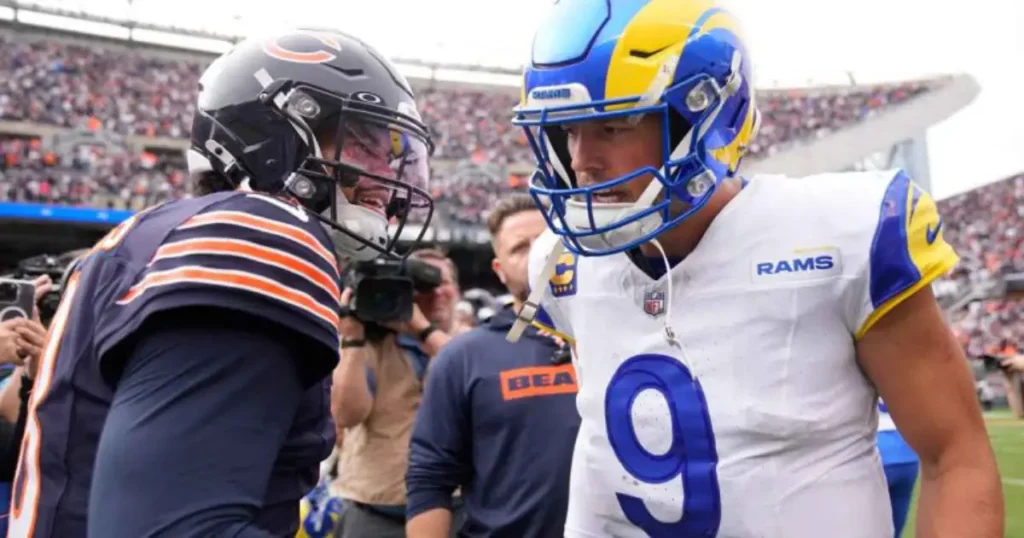
The Los Angeles Rams advanced to the NFC Championship Game with a dramatic 20-17 overtime victory over the Chicago Bears in the NFC Divisional Round playoff game on January 18, 2026, at Soldier Field. In a contest filled with tension, weather challenges, and pivotal plays, the Rams capitalized on a late interception by safety Kamren Curl and a game-winning 42-yard field goal by kicker Harrison Mevis to end Chicago’s postseason run and extend their own path toward Super Bowl LX.
The game, played in snowy conditions with wind chills well below freezing, showcased the resilience of both teams. The Bears, who had captured the NFC North title and entered the playoffs on a high note with a series of comeback victories, faced a veteran Rams squad that had already proven its mettle by upsetting higher seeds earlier in the tournament. Chicago fans filled Soldier Field hoping to witness their first NFC Championship appearance since 2010, but the evening ended in heartbreak as the Rams secured the win on the road.
Defensive Battle and Early Scoring
The contest began as a defensive struggle, with the harsh weather impacting passing accuracy and favoring ground games. The Rams opened the scoring on their first possession, driving 85 yards in 14 plays for a 4-yard touchdown run by running back Kyren Williams. The drive exemplified Los Angeles’ balanced attack, mixing short passes from Matthew Stafford with effective rushing. Stafford finished the game completing 20 of 42 passes for 258 yards, while Kyren Williams contributed significantly on the ground.
Chicago responded with determination but faced early setbacks. On the Bears’ opening drive, quarterback Caleb Williams threw an interception to Rams cornerback Cobie Durant on fourth down after advancing into scoring position. The turnover kept the score at 7-0 in favor of the Rams through the first quarter. The Bears managed a field goal before halftime, trailing 10-3, as both defenses forced punts and limited big plays.
In the third quarter, the Rams extended their lead to 17-10 with another touchdown run from Kyren Williams. Durant added his second interception of Williams late in the period, further stalling Chicago’s momentum. Despite the challenges, the Bears’ defense held strong, sacking Stafford and forcing turnovers on downs at key moments.
Regulation Drama and the Tying Score
As the fourth quarter progressed, Chicago mounted a comeback effort. Trailing by seven late in the game, the Bears drove into Rams territory but faced a critical fourth-and-goal near the 2-yard line. Rams linebacker Omar Speights deflected a pass in the end zone to force a turnover on downs, seemingly sealing the victory for Los Angeles with under five minutes remaining.
However, Chicago’s defense answered by forcing a Rams punt, giving Williams one final chance. With time winding down and facing fourth-and-4 from the Rams’ 14-yard line, Williams evaded pressure, backpedaling to near the 40-yard line before launching a high-arcing pass to tight end Cole Kmet in the end zone. The 14-yard touchdown (with the ball traveling over 50 yards in the air per Next Gen Stats) tied the game at 17-17 with 18 seconds left, sending the game to overtime and electrifying the home crowd.
Overtime Heartbreak: The Decisive Plays
Overtime began with the Rams receiving after Chicago deferred. Los Angeles went three-and-out, punting back to the Bears. Williams led a promising drive, converting a fourth down and moving into Rams territory. On second-and-8, however, Williams attempted a deep pass to wide receiver DJ Moore. The throw was slightly underthrown, allowing Curl to make a diving interception—Williams’ third of the game—returning possession to the Rams.
Stafford then orchestrated a 10-play drive, converting key third downs with connections to receivers like Puka Nacua and Davante Adams. The march positioned Mevis for a 42-yard field goal attempt. Mevis, reliable throughout the season, connected cleanly as time expired, securing the 20-17 win and sending the Rams to face the Seattle Seahawks in the NFC Championship.
Williams completed 23 of 42 passes for 257 yards, two touchdowns, and three interceptions, adding 40 rushing yards. His performance included moments of brilliance but was overshadowed by the costly turnovers. Stafford’s efficiency in clutch situations and the Rams’ defense, which recorded three interceptions, proved decisive.
Statistical Insights and Season Reflections
The game was competitive statistically, with total yards nearly even and time of possession split closely. Turnovers, however, told the story: Chicago’s three interceptions contrasted with Los Angeles’ clean sheet in that category. The Rams improved to 14-5 (including playoffs), demonstrating championship experience under head coach Sean McVay.
For the Bears (finishing 12-6), the season marked significant progress under their coaching staff. Williams, in his second NFL campaign, delivered iconic plays and helped lead a franchise revival, including an NFC North crown and playoff wins. The loss, while painful, provides valuable experience for a young core with salary cap flexibility and draft resources moving forward.
Post-game, social media reflected the emotional toll on Bears fans, with widespread disappointment over the near-miss and praise for Williams’ resilience. The Rams celebrated their ability to “survive and advance,” setting up a high-stakes rematch with Seattle.
This overtime classic highlighted the fine margins in playoff football—one spectacular throw can force extra time, but a single mistake can end a dream season. As Los Angeles continues its pursuit of the Super Bowl, Chicago turns its attention to building on this foundation for future success.